

 English
 Espa?ol
Industry News
NEWS
The fundamental role of the EGR line in the efficiency of modern engines
Content
In the fight for cleaner automotive technology, the Exhaust Gas Recirculation (EGR) Line It serves as a vital bridge between the exhaust manifold and the intake system. Its main function is to divert a precise portion of the inert exhaust gases back to the combustion chamber. By doing so, it reduces the maximum combustion temperature, which directly inhibits the formation of nitrogen oxides (NOx), one of the most harmful pollutants.
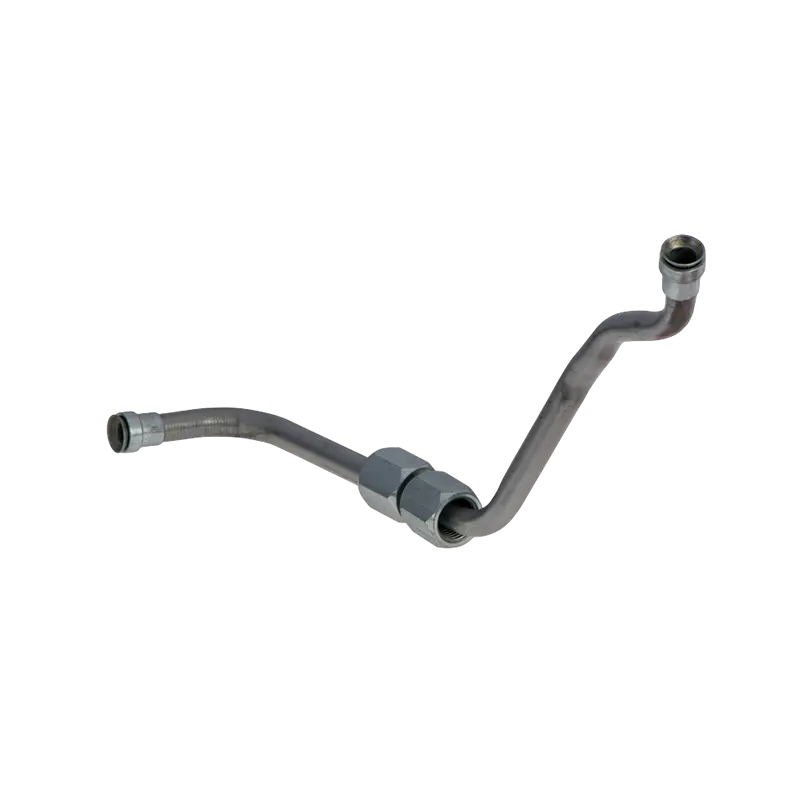
A high-performance EGR line must do more than simply transport gas; must withstand extreme thermal cycles. The exhaust gases leaving the manifold can reach higher temperatures 650°C (1200°F) . If the EGR line is compromised by cracks or carbon buildup, the engine control unit (ECU) will have difficulty balancing the air-fuel ratio, causing a noticeable drop in power and an increase in emissions.
Material Durability: Why Stainless Steel and Corrugated Designs Prevail
The environment inside an EGR pipe is incredibly hostile. It is subject to corrosive exhaust condensate, including sulfuric and nitric acids, as well as intense engine block vibrations. To ensure a lifespan that matches the longevity of the vehicle, premium EGR lines are typically built from 304 or 321 grade stainless steel .
The advantage of corrugated flexible sections
Modern EGR lines typically feature a "bellows" or corrugated section. This is not simply an aesthetic choice; allows the pipe to absorb Thermal expansion and harmonics of the motor. without fracturing at the mounting flanges. Without this flexibility, the rigid connection between the hot exhaust manifold and the relatively cooler intake manifold would eventually break due to differential thermal expansion.
| Feature | Premium Stainless Steel EGR Line | Standard low carbon steel |
|---|---|---|
| Oxidation resistance | Excellent (Up to 800°C) | Poor (risk of peeling) |
| Vibration fatigue life | High (Integrated Flex-Flex) | Low (prone to cracking) |
| Internal carbon adhesion | Low (mirror polished ID) | Moderate (rough surface) |
Signs of EGR Line Failure: What Every Driver Should Know
EGR lines are prone to a specific type of failure: carbon clogging. Over time, soot from the exhaust mixes with oily vapors at the inlet, creating a thick tar-like substance that chokes the pipe.
- Engine knocking (Ping): If the EGR line is blocked, combustion temperatures become too high, causing pre-ignition or "knocking."
- Rough idle: A cracked EGR line acts as a vacuum leak, introducing unmetered air into the engine.
- Failed emissions test: High NOx levels during an inspection are almost always related to a malfunctioning EGR circuit.
- Reduced MPG: Inefficient combustion forces the engine to burn more fuel to maintain cruising speed.
Installation and maintenance: ensure a gas tight seal
Replacing an EGR line is a precision task. Because it carries high-pressure exhaust, the seals at both ends must be perfect. Most systems use multilayer steel joints (MLS) or high temperature O-rings. During installation, it is essential to clean the mounting surfaces on the manifold to prevent "bypass leaks" that can melt nearby plastic components.
For diesel owners, proactive cleaning of the EGR line every 50,000 miles can avoid the need for a complete replacement. The use of specialized carbon solvents can dissolve the buildup and restore the intended flow rate. However, if the pipe shows signs of "bluing" (a sign of extreme overheating) or visible external pitting, a complete replacement is the only safe option to prevent damage to the turbocharger from debris.
Future trends: EGR lines in the era of Euro 7 standards
As global emissions standards such as Euro 7 and EPA 2027 become more stringent, the role of the EGR line expands. We are seeing the increase of Low Pressure EGR Systems (LP-EGR) , where the gases are sucked in after the diesel particulate filter (DPF). This means that the EGR line must now handle cleaner, but colder gases, which are more prone to condensation and "acid rain" inside the pipe.
Modern EGR lines are currently being designed for these systems with internal anti-corrosion coatings to combat this new chemical challenge. By choosing an EGR line designed with these modern stressors in mind, fleet operators can ensure their vehicles remain compliant and efficient over millions of collective miles.
Our Main Products


 Contact Us
+86-138 0586 3066
+86-574 8840 6311
 Products
 Send An E-mail
 Mobile
Copyright ?NINGBO JIATIAN AUTOMOBILE PIPE CO.,LTD. All Rights Reserved.
 China's Premium Automotive Tube Factory
Custom Automotive Pipe Fittings Supply
China's Premium Automotive Tube Factory
Custom Automotive Pipe Fittings Supply